
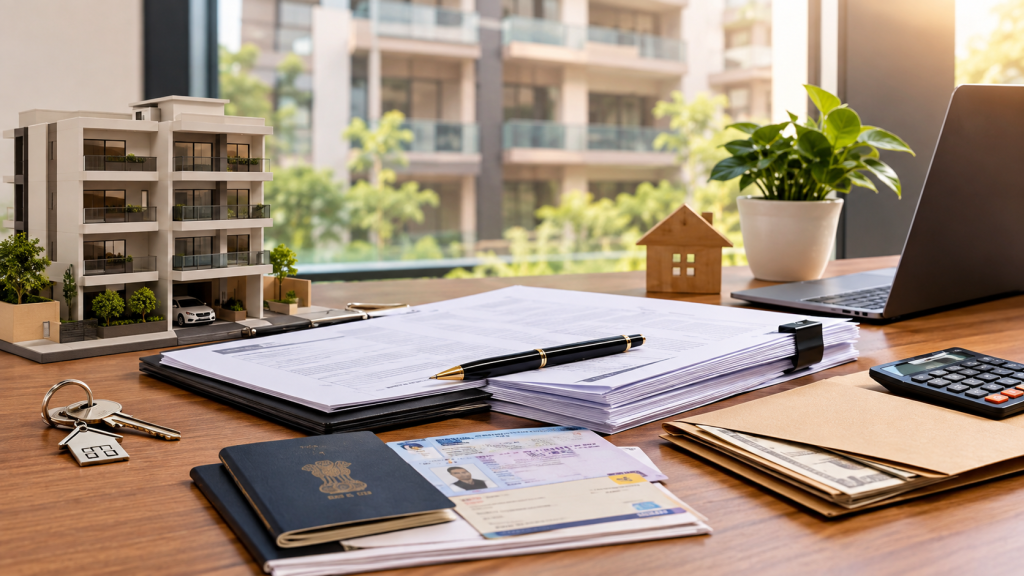
Buying a builder floor feels exciting until the bank asks for a paper you didn’t know existed. Then the loan is stuck for two weeks, the seller is calling every day, and you are running around for copies and signatures.
A builder floor loan is a little different from a loan on a flat in a big society. Banks look more closely at the property papers because the title, the sanctioned plan and your share of the land all matter. So the smart move is to get your documents ready before you apply.
Here is the full checklist, in plain language.
What Is a Builder Floor, and Why Do Banks Ask for More Paperwork?
A builder floor is an independent floor (ground, first, second and so on) in a low-rise building, usually 3 to 4 storeys, built on a single residential plot. It is very common in Delhi NCR, Gurgaon, Noida, Ghaziabad and Faridabad.
Unlike a flat in a large project, you usually get an undivided share of the land and there is often no formal society. Banks therefore want proof that the seller really owns the plot, that the construction is approved, and that no other loan or dispute is attached to it. That is why the property documents matter as much as your income proof.
1. KYC Documents (Identity and Address Proof)
Every lender asks for these. Keep self-attested copies ready.
- PAN card (mandatory)
- Aadhaar card
- Passport, voter ID or driving licence (any one as additional ID)
- Recent passport-size photographs
- Address proof such as a utility bill, rent agreement or passport
Make sure your name and address match across all documents. A small spelling mismatch between PAN and Aadhaar is one of the most common reasons for delay.
2. Income Documents
The bank needs to be sure you can repay the EMI comfortably.
If you are salaried:
- Last 3 to 6 months’ salary slips
- Last 6 months’ bank statements (salary account)
- Form 16 or ITR for the last 2 years
- Employment ID card or appointment letter
If you are self-employed or a business owner:
- ITR for the last 2 to 3 years with computation of income
- Profit and loss account and balance sheet (CA-audited, if applicable)
- Last 12 months’ bank statements (personal and business)
- GST registration and returns
- Business proof, such as a shop licence, registration certificate or partnership deed
Also keep ready: statements of any existing loans and your Form 26AS. Banks check your credit obligations and your CIBIL score before they decide your eligibility.
3. Property Documents (The Ones That Decide Everything)
This is where most builder floor loans get stuck, so read this part carefully.
- Sale deed or agreement to sell between you and the seller or builder
- Title documents: the full chain of ownership, so the bank can trace who owned the plot before the current seller
- Sanctioned building plan approved by the local authority (MCD, GDA, Noida Authority, etc.)
- Builder-buyer agreement and allotment letter, if you are buying from a builder
- Completion or occupancy certificate, where applicable
- Property tax receipts and recent electricity and water bills
- Encumbrance certificate showing there is no existing mortgage or legal liability
- Payment receipts for the amount you have already paid
- NOC from the previous lender and the original property papers, if the seller has an existing loan on the property
- Possession letter, if you are buying a ready-to-move floor
A tip on GPA and SPA: In many builder floor deals, especially in Delhi NCR, property is sold through a General Power of Attorney or a “Will” instead of a registered sale deed. Many banks are cautious about or refuse such properties. Check the lender’s policy before you pay a token amount.
4. Extra Documents Banks May Ask For
Depending on the lender and your profile, you may also be asked for:
- Loan application form with your signature
- Processing fee cheque
- Property valuation and legal verification report (usually arranged by the bank)
- Proof of your down payment (bank statement showing the transfer)
- For NRIs: passport, visa or work permit, overseas income proof, and a power of attorney for someone in India
Common Mistakes That Delay Your Loan
- Applying before checking the title. If the chain of documents is broken, the bank will reject the property, not you.
- Ignoring the sanctioned plan. Extra unapproved construction on the floor or the terrace can hurt your loan amount.
- Mismatched names and addresses across documents.
- Skipping the CIBIL check. A low score can raise your interest rate or lead to rejection.
- Not keeping the down payment ready. Banks fund only a part of the property value, so the rest must come from you.
Quick Tips to Get Approved Faster
- Make a folder (physical and digital) with all documents before you approach the bank.
- Get the property papers checked by a good property lawyer first.
- Compare two or three lenders, because policies on builder floors differ.
- Ask for the bank’s official document checklist in writing.
- Keep your bank statements clean, with no bounced cheques or unexplained large entries.
Frequently Asked Questions
Do banks give home loans for builder floors?
Yes. Most major banks and housing finance companies do, provided the title is clear, the plan is approved and the property is in an approved residential area.
How much loan can I get on a builder floor?
It is usually a percentage of the property’s market value (often up to 75 to 90 percent, depending on the loan amount and lender), and it also depends on your income and credit score.
Can I get a loan if the property is on GPA or SPA?
Many lenders do not finance such properties. Some may, after strict legal checks. Confirm with the bank before you commit.
How long does approval take?
With complete and correct documents, it can take roughly a week to two weeks. Legal checks on the property are usually what takes the time.
Is a sanctioned plan compulsory?
Yes, in most cases. The bank uses it to confirm that the construction is legal and matches what is being sold.
Final Thoughts
A builder floor can be a great home. You get more privacy, fewer maintenance charges and often a better location. But the loan process rewards people who are prepared. If your KYC and income documents are in order and the property papers are verified by a lawyer, approval becomes much smoother and quicker.
Do the paperwork first and the excitement second. Your future self, and your EMI, will thank you.
Disclaimer: Document requirements differ from bank to bank and change from time to time. Please confirm the latest checklist with your lender before applying.